Tennis Elbow
Pain and tenderness on the outside of the elbow, from overload of the tendons that extend your wrist and fingers. You don't need to play tennis to get it.
What is tennis elbow?
Tennis elbow, or lateral epicondylalgia, is an overload injury of the tendons that attach to the outside of the elbow and control wrist and finger extension. Despite the name, it's more commonly linked to repetitive gripping, typing or manual work than to tennis.
Common symptoms
- Pain and tenderness on the outside of the elbow
- Pain when gripping, shaking hands or lifting with a straight arm
- Discomfort that can spread down the forearm
- Weakness in grip strength
- Pain that builds gradually rather than starting suddenly
What helps
- A progressive loading programme for the forearm tendons, the most evidence-based treatment
- Temporarily modifying gripping or lifting tasks that aggravate it
- Avoiding complete rest, which tends to slow recovery
- Addressing technique if it's related to sport or work
- Patience, as tendon problems often take a few months to fully settle
How we treat it
Treatment centres on a structured, progressive exercise programme to build the forearm tendon's tolerance to load, which has the strongest evidence for lasting improvement. Shockwave therapy and hands-on treatment can help alongside this in more stubborn cases.


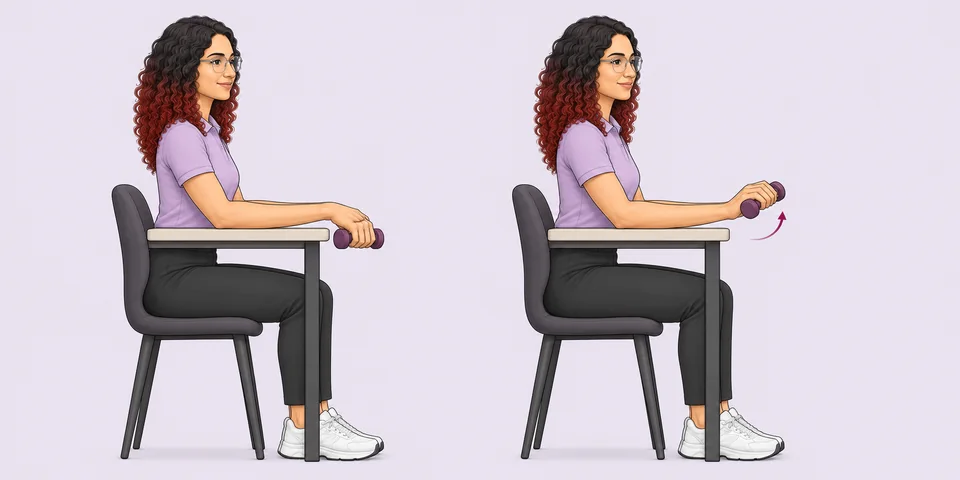
Something to try before your appointment
Six steps in three levels to settle the daily grip load and rebuild what your hand can hold.
Read the plan →Start sorting it this week
Book online in a couple of minutes, or call the clinic.
Warrington
Inside Gym and Tonic, Unit 5 Railway Court,
686 Knutsford Road, Latchford, Warrington WA4 1JW

Opening hours
Thursday 7am–8pm
Sat & Sun 8am–12pm
Tennis Elbow questions
No, complete rest isn't usually helpful. We'll show you how to modify activities and gradually reload the tendon instead.
It varies, but tendon problems often take a few months of consistent exercise to substantially improve.
Injections are usually not the first choice, as evidence suggests they can give short-term relief but don't improve longer-term outcomes as well as exercise does.
Written and reviewed by Arya Kenkre, Lead MSK Physiotherapist (HCPC PH144505). Last reviewed September 2026. This page is general information and doesn't replace an individual assessment.