

Persistent pain is not one-size-fits-all
Pain lasting more than three months can be influenced by sensitivity, daily load, sleep and stress together.
Non-specific means no single disease or injury explains the pain. Exercise helps, but there is no one best routine, so the one you will actually keep doing matters most.
This plan is for persistent non-specific low back pain that has been assessed. It is not for fracture, infection, cancer-related pain or recovery after surgery.
How to use this plan
Pick one or two exercises that suit you right now. You do not need to do all six, and movement and strengthening can overlap.
Treat the sets and reps as a starting point rather than a prescription. How much you do and how often should fit you.
Build one thing at a time: repetitions, weight or duration, not all three at once.
Level 1 · Find your start
Gentle movement practice to get the back moving comfortably again.
Roll the knees gently
Lie with your knees bent and your head resting comfortably. Roll both knees a little each way, then return to centre.

Dose: 5 slow repetitions each way.
Keep the movement comfortable rather than forcing it.
Find a pelvic tilt
Gently roll your pelvis to flatten the gap in your lower back, then release to a comfortable neutral.

Dose: 5–10 slow repetitions.
Keep it small. This is movement practice, not a fix in itself.
Level 2 · Build capacity
Build the strength that makes everyday movement feel easier.
Build your bridge
Lie with your knees bent, feet flat and head resting down. Lift your hips comfortably and lower slowly.
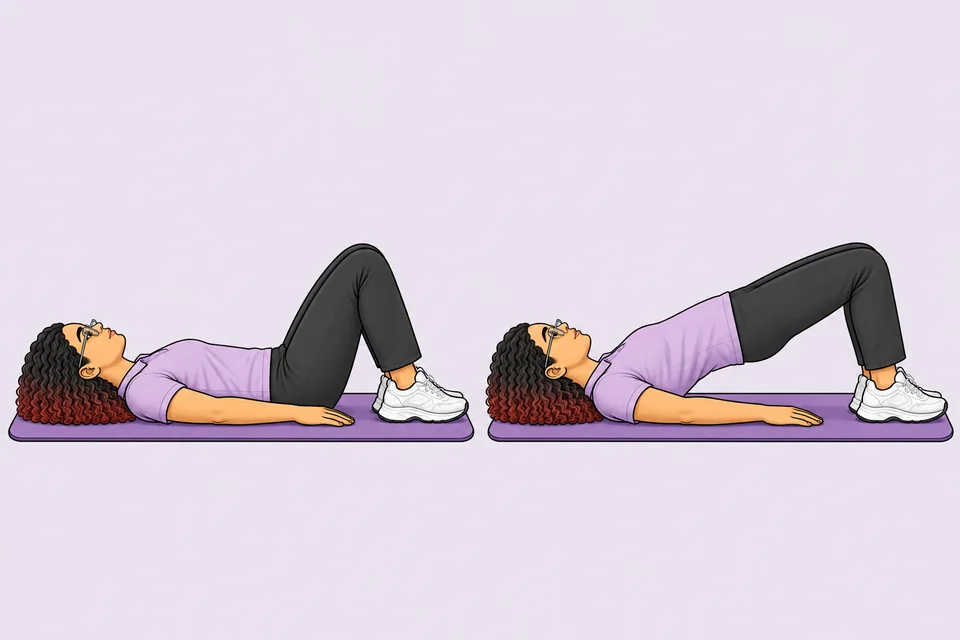
Dose: 1–2 sets of 8–12, on 2–3 days per week.
Use a manageable height and keep breathing.
Practise chair rises
Lean forwards from a stable chair and stand. Return to sitting slowly with your feet flat.

Dose: 1–2 sets of 8–12, on 2–3 days per week.
Use your hands or a higher chair if you need to.
Level 3 · Practise your tasks
Rebuild lifting and carrying, which are usually the things that have been avoided.
Rebuild the lift
Start with a light box on a raised, stable surface. Keep it close, then lift and lower with a comfortable stance.

Dose: 1–2 sets of 5–8, on 2–3 days per week.
Start light and gradually practise the lifts you actually need.
Add a short carry
Use two equally light bags, one in each hand. Walk a short route and set them down gently.

Dose: 2 carries of 20–30 seconds, 2–3 days weekly.
Choose a manageable load and breathe normally.
Progressing without flaring things up
- Start at a level you can repeat. Movement and strengthening can overlap.
- Build one thing at a time: repetitions, weight or duration.
- Reduce the dose if symptoms remain worse the next day, and review a plan that is not helping.
- Stop if pain travels further down your leg, or if tingling or numbness increases.
Exercise is one part of care. An individual plan can also address confidence, sleep and the daily demands that keep feeding the problem.
When to get checked first
New bladder or bowel changes, numbness around the genitals or anus, or rapidly worsening leg weakness need urgent assessment: go to A&E. If you are not sure, NHS 111 can advise you.
Want a plan built around your back?
There is no single best routine for persistent back pain, which is exactly why a plan built around your symptoms, your work and your sleep tends to beat a generic one. No GP referral needed.
Book an assessmentRead next
- Mechanical back pain — what it is, how we assess it and how we treat it
- Back pain physiotherapy in Warrington — other causes and what helps
Sources and limits
Primary research and clinical guidelines were used where available, with NHS materials supporting the practical instructions. The exercises, their order and the starting doses are our adaptation of that guidance rather than a protocol tested as a whole in a trial. The levels are flexible menus, not fixed healing stages or a promise of a cure. This article explains a condition after assessment; it cannot diagnose you.
- World Health Organization (2023) — Guideline for non-surgical management of chronic primary low back pain in adults. who.int/publications/i/item/9789240081789
- WHO evidence review (2023) — Structured exercise for chronic primary low back pain. pubmed.ncbi.nlm.nih.gov/37991647/
Reviewed 28 November 2026 by Arya Kenkre, HCPC PH144505.