

What hip arthritis can feel like
Osteoarthritis can cause pain in the groin, thigh or buttock, along with stiffness and reduced movement.
Symptoms and X-ray changes do not always match. Tailored strength and aerobic exercise are core treatments, whatever the scan shows.
This plan is for hip osteoarthritis that has been assessed. It is not a protocol for a hip replacement, a fracture or sudden-onset hip pain.
How to use this plan
Pick one or two exercises that suit you right now. You do not need to do all six, and you should not work through every level in one session.
Treat the sets and reps as a starting point rather than a prescription. How far you move, how much support you use and how often you do it should all fit you.
Move up a level when an exercise starts to feel easy and your hip settles well the next day, rather than after a set number of weeks.
Level 1 · Find your start
Gentle movement to get the hip used to being asked to work.
Move the hip gently
Lie with your head resting flat and your legs comfortable. Slide one heel towards you, then return slowly.

Dose: 5–10 each side, once daily.
Use a manageable range and do not pull into groin pain.
Hinge with support
Hold a secure surface and soften your knees. Send your hips back a little, then stand tall again.

Dose: 1–2 sets of 6–10, on 2–3 days per week.
Move from the hips in a comfortable range.
Level 2 · Build capacity
Build the strength that carries you through walking and standing up.
Build a bridge
Lie with your knees bent, feet flat and head supported. Lift your hips comfortably, then lower slowly.
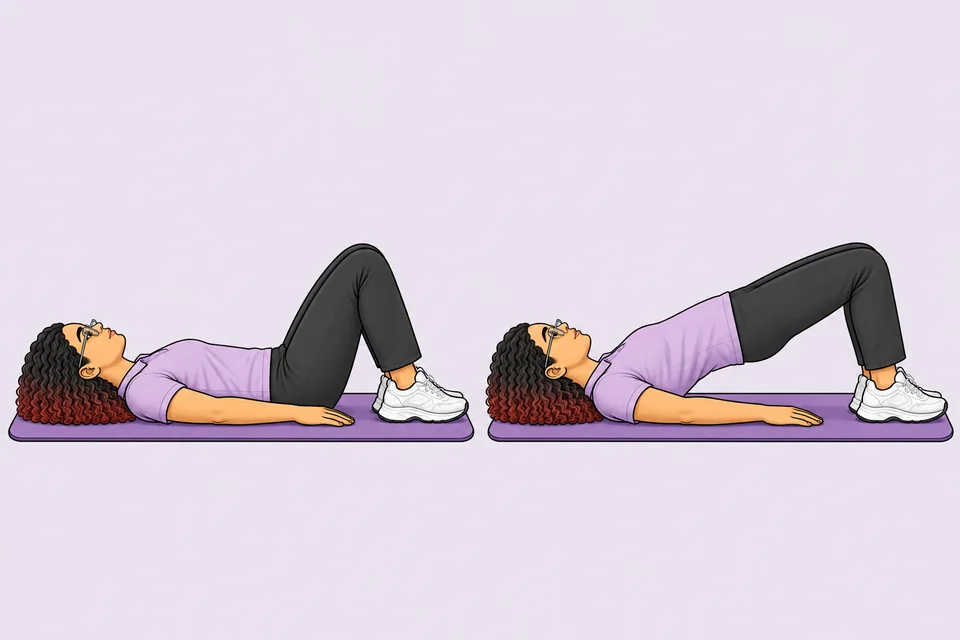
Dose: 1–2 sets of 8–12, on 2–3 days per week.
Keep breathing and lift only as high as is manageable.
Lift the leg sideways
Hold a stable chair and keep your toes pointing forwards. Move one leg a little sideways, then return.
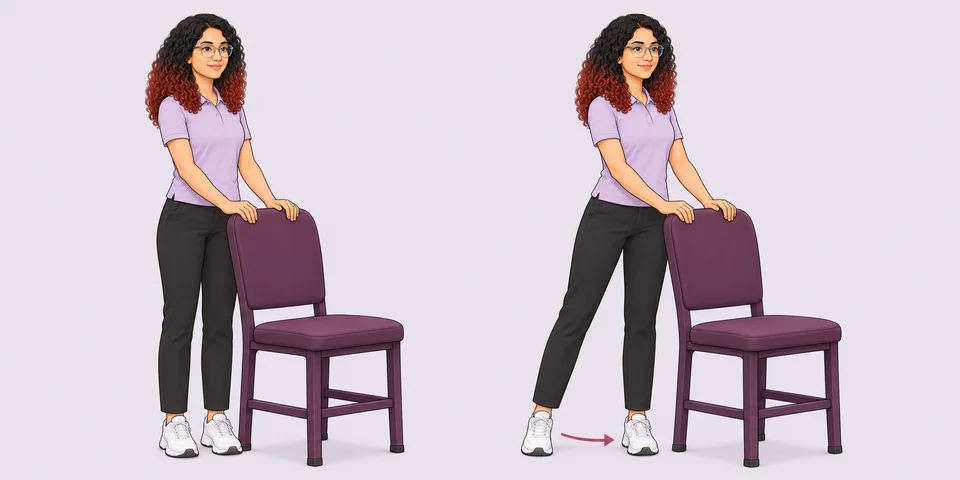
Dose: 1–2 sets of 8–12, on 2–3 days per week.
Keep your pelvis level and avoid leaning your trunk.
Level 3 · Practise your tasks
Rehearse the jobs the hip actually has to do.
Load the chair rise
Hold a light weight close to you and use a stable chair. Stand up and sit down slowly with your feet planted.

Dose: 1–2 sets of 6–10, on 2–3 days per week.
Begin without a weight if you need to.
Build your step-up
Hold the rail and use a low, secure step. Step up with control, then return slowly.

Dose: 1–2 sets of 5–8 each side, 2–3 days weekly.
Lower the step if you cannot control the return.
Progressing without flaring things up
- Choose the level that fits your current strength and balance.
- Build resistance or repetitions gradually, and reduce the dose if symptoms stay worse the next day.
- Add short walks, cycling or another aerobic activity you can manage.
- Aim for easier daily tasks and a routine you can keep up, rather than chasing a perfect range of movement.
If your daily function keeps declining despite a consistent plan, it is worth reviewing your treatment options with your clinician.
When to get checked first
Seek urgent assessment after a fall with severe hip pain or an inability to bear weight, or for a fever with a hot, painful joint. If you are not sure, NHS 111 can advise you.
Want a plan built around your hip?
This is a starting point, not a personalised programme. At our Warrington clinic we assess what is driving your hip pain and set the levels, doses and support to match. No GP referral needed.
Book an assessmentRead next
- Hip osteoarthritis — what it is, how we assess it and how we treat it
- Hip pain physiotherapy in Warrington — other causes and what helps
Sources and limits
Primary research and clinical guidelines were used where available, with NHS materials supporting the practical instructions. The exercises, their order and the starting doses are our adaptation of that guidance rather than a protocol tested as a whole in a trial. The levels are flexible menus, not fixed healing stages or a promise of a cure. This article explains a condition after assessment; it cannot diagnose you.
- NICE (2022) — Osteoarthritis in over 16s: diagnosis and management, NICE guideline NG226. nice.org.uk/guidance/ng226/chapter/Recommendatio
Reviewed 28 November 2026 by Arya Kenkre, HCPC PH144505.