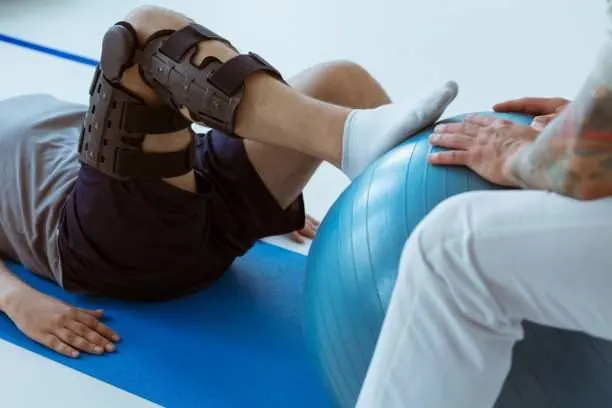

Why Early Physiotherapy Produces Better Outcomes
For most types of surgery, beginning gentle, appropriately-guided movement early supports recovery rather than hindering it. The evidence on this varies by procedure, though: a 2025 systematic review and meta-analysis specifically looking at early versus delayed outpatient physiotherapy after hip and knee replacement found low to very low quality evidence that starting outpatient sessions early did not improve pain, function or quality of life compared with delaying them (LeBel et al., 2025). What is well established is the value of early, gentle movement and mobilisation in hospital and in the first days at home, for the reasons below:
- Preventing stiffness: Scar tissue begins forming soon after surgery. Early gentle movement, within the limits set by your surgical team, can help preserve range of motion.
- Reducing muscle atrophy: Studies of healthy muscle show measurable loss of muscle volume within the first few days of immobility, with the most rapid loss in the first one to two weeks (Hardy et al., PMC9745468, 2022). Gentle, appropriate movement helps minimise this loss.
- DVT prevention: NICE guidance recommends encouraging patients to mobilise as soon as possible after surgery as part of reducing the risk of venous thromboembolism (NICE NG89, 2018).
- Pain management: Appropriate movement and positioning can help reduce pain by improving circulation and reducing protective muscle guarding.
- Psychological confidence: Early guided movement can help patients feel more in control of their recovery, which may reduce anxiety and support motivation.
The right pace and type of early movement always depends on your specific procedure and your surgeon's protocol, which is why physiotherapists tailor the intensity of early sessions to the individual rather than applying a single rule to every surgery.
When Can Physiotherapy Start for Common Procedures?
- Total hip replacement: Day 1–2 post-op (in hospital), continuing at home from discharge
- Total knee replacement: Day 1–2 post-op, home physiotherapy from discharge
- Spinal surgery (discectomy/fusion): Usually day 1–2 with gentle mobilisation; full programme within 1–2 weeks
- ACL reconstruction: Day 1–3 post-op for early mobility; structured programme from week 1
- Shoulder surgery: Timing varies by procedure, your physiotherapist will follow your surgeon's specific protocol
What Does Early Physiotherapy Look Like?
Early post-operative physiotherapy is gentle, progressive and entirely guided by your symptoms and healing stage. It is not about pushing through pain, it's about strategic, controlled movement that promotes healing and prevents complications.
In the first 1–2 weeks, sessions typically include:
- Safe transfers and mobility techniques
- Gentle range-of-motion exercises
- Swelling and pain management strategies
- Breathing exercises where relevant
- Walking practice with appropriate aids
- Basic strengthening to prevent muscle loss
Why Home Visits Are Ideal in the Early Post-Op Period
In the days and weeks immediately after surgery, travelling to a clinic is genuinely difficult, sometimes impossible. Home visit physiotherapy solves this completely. Your physiotherapist comes to you, starts your rehabilitation in your own environment, and ensures you're progressing safely from day one without the barrier of travel.
Just Home from Surgery in Manchester, Liverpool, Chester or Warrington?
Don't wait to start your rehabilitation. Book a home visit and we'll come to you within days of your discharge.
Book a Home Visit →References Used in This Revision
- LeBel S, King MG, Semciw AI, Snowdon DA (2025) — The Effect of Early Post-Operative Outpatient Physiotherapy on Outcomes Following Lower Limb Arthroplasty: A Systematic Review and Meta-Analysis. Musculoskeletal Care. pubmed.ncbi.nlm.nih.gov/40660636
- Hardy EJO, Inns TB, Hatt J, et al. (2022) — The time course of disuse muscle atrophy of the lower limb in health and disease. Journal of Cachexia, Sarcopenia and Muscle. PMC9745468. pmc.ncbi.nlm.nih.gov/articles/PMC9745468
- NICE NG89 (2018) — Venous thromboembolism in over 16s: reducing the risk of hospital-acquired deep vein thrombosis or pulmonary embolism. nice.org.uk/guidance/ng89