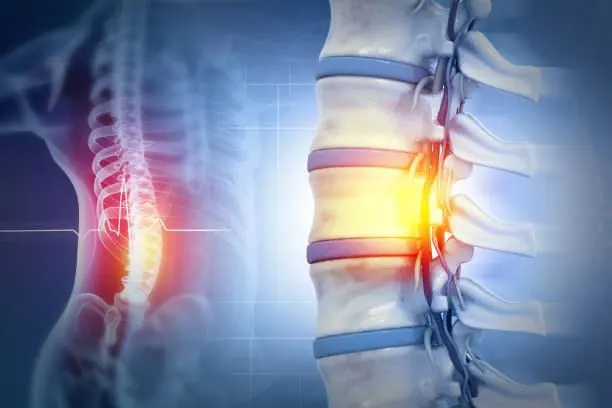

Types of Spinal Surgery and What They Involve
- Discectomy / Microdiscectomy: Removal of part of a herniated disc pressing on a nerve. Most common for sciatica caused by disc prolapse.
- Laminectomy / Decompression: Removal of part of the vertebra to relieve pressure on the spinal cord or nerve roots. Often used for spinal stenosis.
- Spinal Fusion: Two or more vertebrae are permanently joined together. Used for instability, spondylolisthesis or following decompression where stability is needed.
- Disc Replacement: A damaged disc is replaced with an artificial implant, an alternative to fusion in some cervical and lumbar cases.
Each procedure has its own rehabilitation protocol, so your physiotherapist will always follow your surgeon's specific post-operative instructions.
The First Week at Home
The first seven days after spinal surgery are about protection and basic mobility, not pushing through recovery as fast as possible. Priorities include:
- Safe movement: Learning how to get in and out of bed, chairs, and cars without placing excessive load on the spine
- Posture management: Understanding which positions are safe and which to avoid during the healing phase
- Wound care awareness: Monitoring for signs of infection (increasing redness, swelling, warmth, discharge)
- Pain management: Using prescribed medication appropriately and supplementing with positioning strategies
- Gentle walking: Short, regular walks are almost universally encouraged from day one, typically 5–10 minutes, several times per day
Weeks 2–6: Building a Foundation
As the acute post-operative phase passes, rehabilitation gradually increases in intensity:
- Gentle core activation exercises, learning to re-engage the deep stabilising muscles of the spine without overloading the surgical site
- Gradual increase in walking distance and duration
- Posture and body mechanics education, how to lift, bend and move safely
- Nerve mobility exercises (for nerve-related surgery), gentle, progressive nerve glides to restore full neural movement
- Addressing muscle deconditioning from the pre-operative period
What to Avoid in the Early Recovery Phase
- Prolonged sitting: Increases disc pressure and slows healing, break up sitting every 20–30 minutes
- Forward bending and lifting: Typically restricted for 6–12 weeks depending on procedure
- High-impact activity: Running, jumping and heavy gym work are not appropriate during bone and tissue healing
- Driving: Usually restricted for 2–6 weeks, follow your surgeon's specific guidance
The 3–6 Month Phase
From around 6–8 weeks, rehabilitation progresses toward functional strength and return to normal activities. This phase includes progressive strengthening of the core, gluteals and lower limb muscles; aerobic conditioning; and gradual return to activities like gardening, housework and recreational exercise.
For spinal fusion patients, return to full activity takes longer, typically 3–6 months, as bony fusion must be confirmed on imaging before loading the spine fully.
Warning Signs to Report to Your Surgeon
- New or worsening neurological symptoms: pins and needles, numbness, weakness in the legs
- Loss of bladder or bowel control, seek emergency care immediately
- Severe, worsening back pain not controlled by prescribed medication
- Signs of infection at the wound site
- Fever above 38°C
Why Home Physiotherapy Is Ideal After Spinal Surgery
Getting in and out of a car, navigating clinic waiting rooms and sitting for prolonged periods are all genuinely difficult, and potentially harmful, in the early weeks after spinal surgery. Home visit physiotherapy removes these barriers entirely. Your physiotherapist can assess your home environment, adapt exercises to your space and equipment, and ensure your rehabilitation progresses safely from the comfort of your own home.
Recovering from Spinal Surgery in Manchester, Liverpool, Chester or Warrington?
We come to you, no difficult journeys, no waiting rooms. Book a home visit and start your rehabilitation properly.
Book a Home Visit →