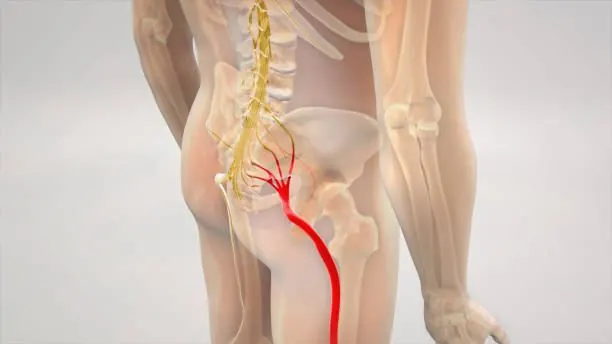

What Is Sciatica?
Sciatica refers to pain that travels along the path of the sciatic nerve, from the lower back, through the buttock, and down the back of the leg, sometimes reaching the foot. It's caused by irritation or compression of the sciatic nerve, most commonly from a disc herniation (slipped disc) or spinal stenosis.
Classic symptoms include:
- Shooting or burning pain from lower back into the leg
- Numbness or tingling down the leg or into the foot
- Weakness in the affected leg
- Pain that worsens when sitting, coughing or sneezing
- Difficulty walking or standing for prolonged periods
How Physiotherapy Treats Sciatica
The goals of physiotherapy for sciatica are to reduce nerve irritation, relieve pain, restore movement and prevent recurrence. Most people with sciatica do not require surgery, and NICE guidance recommends exercise and physiotherapy as part of first-line, non-invasive management, ahead of more invasive options (NICE NG59, 2020).
Neural Mobilisation
Gentle nerve gliding exercises aim to mobilise the sciatic nerve through its pathway, reducing sensitivity and restoring normal nerve movement. A 2023 meta-analysis found neural mobilisation produced meaningful reductions in pain and disability for people with lumbar radiculopathy (the nerve root irritation that causes sciatica), though the authors noted most included trials were small and at high risk of bias, so the results should be interpreted with some caution (Lin et al., PMC10744707, 2023). It is typically used as one part of a broader treatment plan rather than in isolation.
Spinal Decompression Techniques
Specific positions and exercises that reduce pressure on the affected disc or nerve root, providing immediate relief and long-term disc recovery.
Core and Gluteal Strengthening
Strengthening the deep abdominal muscles, hip extensors and gluteal muscles reduces the load on the lumbar spine and protects the nerve from further irritation.
Exercises You Can Try at Home
Important: These exercises are general guidance only. Always consult a physiotherapist before starting any programme, particularly if your symptoms are severe, worsening, or accompanied by bladder/bowel changes.
- Knee-to-chest stretch: Lying on your back, gently draw one knee toward your chest and hold for 20–30 seconds. Repeat 3 times each side.
- Piriformis stretch: Cross the affected leg over the other, then gently pull the knee toward the opposite shoulder until you feel a stretch deep in the buttock.
- Neural floss (sitting): Sitting in a chair, extend the affected leg while flexing your foot, hold 5 seconds, then relax. Repeat 10 times. Caution: if this significantly increases your leg pain, stop and consult a physiotherapist.
- Cat-cow: On hands and knees, alternate between arching and rounding your back slowly. Helps mobilise the lumbar spine and reduce nerve compression.
What to Avoid with Sciatica
- Prolonged sitting, especially in low, soft chairs
- Bending forward with straight legs
- Heavy lifting without proper technique
- Bed rest for extended periods, movement aids recovery
How Long Does Sciatica Last?
Most people with sciatica experience early improvement in symptoms, usually within the first 2–3 months, with or without treatment (Ryan et al., PMC7295411, 2020). Recovery is not guaranteed to be quick, though: a 2022 systematic review found that up to 45% of people still have symptoms at 12 months (Dove et al., PMC9925551, 2022). Persistent or recurring sciatica benefits from a structured physiotherapy programme, and early assessment gives you the best opportunity to manage symptoms and reduce the risk of them becoming long-standing.
Dealing with Sciatica in Manchester, Liverpool, Chester or Warrington?
Our physiotherapists visit you at home and provide targeted sciatica treatment from day one. Book today, no GP referral needed.
Book a Home Visit →References Used in This Revision
- NICE NG59 (2020) — Low back pain and sciatica in over 16s: assessment and management. nice.org.uk/guidance/ng59
- Lin CW, et al. (2023) — Neural Mobilization for Reducing Pain and Disability in Patients with Lumbar Radiculopathy: A Systematic Review and Meta-Analysis. PMC10744707. pmc.ncbi.nlm.nih.gov/articles/PMC10744707
- Dove L, et al. (2022) — How effective are physiotherapy interventions in treating people with sciatica? A systematic review and meta-analysis. European Spine Journal. PMC9925551. pmc.ncbi.nlm.nih.gov/articles/PMC9925551
- Ryan C, Pope CJ, Roberts L (2020) — Why managing sciatica is difficult: patients' experiences of an NHS sciatica pathway. A qualitative, interpretative study. BMJ Open. PMC7295411. pmc.ncbi.nlm.nih.gov/articles/PMC7295411