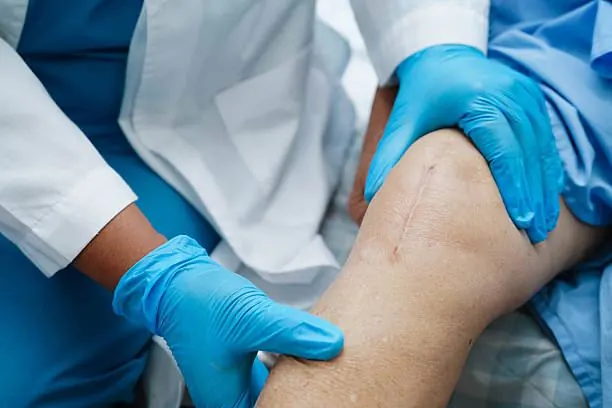

What Happens During Knee Replacement Surgery?
In a total knee replacement, the damaged surfaces of the knee joint are removed and replaced with metal and plastic components designed to replicate the natural movement of a healthy knee. The procedure typically takes one to two hours and most patients are discharged from hospital within two to three days.
The surgery addresses the structural cause of your knee pain — usually severe osteoarthritis — but it cannot undo the muscle weakness, reduced mobility and movement patterns that built up in the months or years before the operation. That is where physiotherapy comes in.
Why Physiotherapy Is Essential After Knee Replacement
Without structured physiotherapy, the risk of complications following knee replacement increases significantly. Scar tissue can form around the joint, restricting movement. The quadriceps and surrounding muscles weaken rapidly without targeted rehabilitation. Gait patterns compensated for years of pain do not self-correct without guidance.
A systematic review and meta-analysis of physiotherapy exercise following total knee replacement found that, compared with minimal or no structured intervention, post-operative physiotherapy produced meaningful improvements in physical function and pain at three to four months, though the authors noted the longer-term evidence base is less robust and benefits relative to minimal intervention narrow over time (Artz et al., PMC4333167, 2015). Structured rehabilitation in the early months remains an important part of recovery, helping you regain function faster even where longer-term outcomes eventually converge.
Knee Replacement Recovery Week by Week
Weeks 1 to 2 — Managing Pain and Regaining Basic Movement
The priority in the first two weeks is managing pain and swelling, preventing blood clots, and beginning to restore basic movement. Your physiotherapist will guide you through gentle exercises to activate the quadriceps, improve circulation and begin bending the knee. Walking with a frame or crutches typically begins within 24 hours of surgery. Most patients can manage stairs before discharge with appropriate support.
Weeks 3 to 6 — Building Strength and Mobility
As pain and swelling reduce, physiotherapy becomes more active. The focus shifts to strengthening the quadriceps, hamstrings and hip muscles, improving your range of movement and normalising your walking pattern. Many patients are walking without crutches by week four to six. Your physiotherapist will progress your exercise programme based on your individual response and recovery goals.
Weeks 6 to 12 — Restoring Function and Confidence
By six weeks most patients are moving with increasing confidence and returning to light daily activities. Physiotherapy at this stage focuses on functional strength — the ability to climb stairs, get up from a chair, walk longer distances and manage uneven ground. Your programme will be progressed to reflect your specific goals, whether that is returning to golf, gardening or an active retirement.
3 to 6 Months — Long-Term Recovery
Full recovery from total knee replacement typically takes three to six months, though meaningful improvement continues for up to a year. By three months most patients have returned to the majority of their normal activities. Your physiotherapist will ensure your strength, balance and movement quality are optimised for the long term, reducing the risk of falls and protecting the longevity of your new joint.
How Iris Physio Supports Knee Replacement Recovery
At Iris Physio we provide structured, one-to-one post-operative physiotherapy for knee replacement patients at our clinics in Warrington and Nottingham. Every patient is assessed individually and given a personalised rehabilitation programme designed around their surgery, their current physical condition and their recovery goals.
You will always see your dedicated physiotherapist — the same clinician at every session, who knows your history and monitors your progress. We work alongside your surgical team's guidance and can share progress notes with your consultant if you wish.
No GP referral is needed. We aim to see post-operative patients within three to five days of enquiry, and prioritise rapid assessment for those in the early stages of recovery.
Frequently Asked Questions About Knee Replacement Physiotherapy
Physiotherapy begins in hospital, often within 24 hours of surgery. Once discharged, outpatient physiotherapy should begin as soon as possible — ideally within the first one to two weeks. A systematic review of early supervised exercise after knee replacement found some short-term gains in early movement, though the authors noted high-quality evidence on the optimal timing, type and duration of early exercise is still limited (Sattler et al., PMC6352456, 2019). Starting promptly and consistently is generally recommended.
This varies by individual. Most patients benefit from regular sessions over a period of six to twelve weeks, combined with a home exercise programme. Your physiotherapist will give you a realistic estimate at your initial assessment and review your progress regularly.
Yes. Iris Physio offers home visit physiotherapy on demand from £80 for patients who are unable to attend a clinic in the early stages of recovery. Home visits are available across Warrington, Nottingham and surrounding areas.
It may help with certain outcomes. Pre-operative physiotherapy, known as prehabilitation, has limited evidence of reducing hospital stay and increasing post-operative muscle strength after total knee replacement, though a 2022 systematic review found the evidence for its effect on pain, mobility and daily activities is currently inconclusive and called for more research (Konnyu et al., PMC9464791, 2022). Strengthening the muscles around the knee before surgery is still a reasonable goal, helping you begin your recovery from a stronger baseline. Iris Physio offers prehabilitation programmes at all three clinic locations.
Most patients walk with crutches or a frame immediately after surgery and progress to walking unaided by four to six weeks. Normal walking patterns are typically restored by three months with appropriate physiotherapy support.
Ready to Start Your Recovery?
Whether you are preparing for knee replacement surgery or have recently had your procedure, Iris Physio's HCPC registered physiotherapists are here to support your recovery at every stage. Book your initial assessment at our Warrington or Nottingham clinic today.
References Used in This Revision
- National Joint Registry (2023) — NJR 20th Annual Report. njrcentre.org.uk
- Artz N, Elvers KT, Lowe CM, Sackley C, Jepson P, Beswick AD (2015) — Effectiveness of physiotherapy exercise following total knee replacement: systematic review and meta-analysis. BMC Musculoskeletal Disorders. PMC4333167. pmc.ncbi.nlm.nih.gov/articles/PMC4333167
- Sattler LN, Hing WA, Vertullo CJ (2019) — What is the evidence to support early supervised exercise therapy after primary total knee replacement? A systematic review and meta-analysis. BMC Musculoskeletal Disorders. PMC6352456. pmc.ncbi.nlm.nih.gov/articles/PMC6352456
- Konnyu KJ, Thoma LM, Cao W, et al. (2022) — Prehabilitation for Total Knee or Total Hip Arthroplasty: A Systematic Review. PMC9464791. pmc.ncbi.nlm.nih.gov/articles/PMC9464791