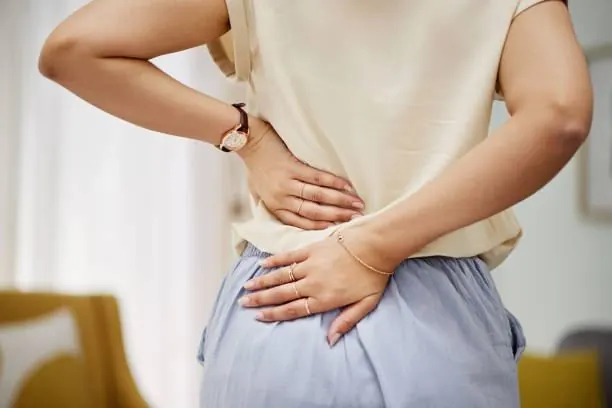

What Changes in the Spine in Your 50s?
Several structural changes occur in the lumbar spine as we age into our 50s and 60s, affecting the discs, joints, muscles and bone density that support the back. These changes explain why back pain becomes more common in midlife, but none of them make pain inevitable or untreatable. The main changes are:
- Disc dehydration: Spinal discs lose water content and height, reducing their shock-absorbing capacity
- Facet joint arthritis: Degenerative changes in the small spinal joints cause stiffness and localised pain
- Reduced core muscle mass: Natural sarcopenia (age-related muscle loss) reduces the muscular support around the lumbar spine — one study of elderly patients found 40% of those with chronic low back pain met diagnostic criteria for sarcopenia, compared with 26.6% of those without back pain (Sakai et al., PMC6372819, 2017)
- Reduced spinal mobility: Increased stiffness in the spinal segments and surrounding fascia
- Hormonal changes: In women, the relative oestrogen deficiency that follows menopause is associated with accelerated disc degeneration and bone density loss, and may help explain why low back pain is more prevalent in postmenopausal women than in age-matched men (Wang, PMC5987020, 2016)
Why "Just Rest" Is the Worst Advice
Resting and avoiding activity is one of the most damaging things people do with back pain in their 50s — movement, not rest, is what the evidence supports. While rest may provide short-term relief, prolonged inactivity accelerates the very muscle loss and joint stiffness that drives chronic back pain. A Cochrane review found that people with acute low back pain who are advised to rest in bed have slightly more pain and slightly less functional recovery than those advised to stay active, while for sciatica there was little difference between the two approaches (Dahm et al., PMC12161166, Cochrane Review). NICE guidance similarly recommends encouraging people to continue with normal activities as part of self-management (NICE NG59, 2020).
What Actually Works
Targeted Exercise
Not all exercise is equal for back pain. A physiotherapist will identify whether your back benefits from flexion-based, extension-based or neutral-spine exercises, the wrong approach can worsen symptoms.
Manual Therapy
Hands-on techniques, joint mobilisation, soft tissue work and nerve mobilisation, can provide significant relief from acute pain flares and help restore movement.
Lifestyle Modification
Ergonomic assessment of your home environment, sleeping positions and daily activity patterns can make a profound difference. Home visit physiotherapy is uniquely placed to assess this in context.
Addressing Muscle Weakness
Progressive strength training targeting the gluteal muscles, hip extensors and deep spinal stabilisers reduces pain and prevents recurrence. This is not about going to the gym, it starts with targeted exercises in your living room.
What About Painkillers?
Painkillers can help manage acute pain flares, but they are not a long-term solution for back pain. Evidence reviews have found limited and inconsistent evidence that opioids provide meaningful long-term benefit for chronic back pain, while long-term use carries a recognised risk of dependence and other side effects. Physiotherapy addresses the root causes rather than masking symptoms, leading to more sustainable, lasting improvement.
You Don't Have to Accept It
Back pain in your 50s, 60s and beyond is common, but it is not inevitable, and for most people it responds well to the right intervention. Many of the people we see with chronic back pain achieve significant, lasting improvement with physiotherapy.
Back Pain in Manchester, Liverpool, Chester or Warrington?
You don't have to live with it. Book a home visit and let us help you get back to the life you want.
Book a Home Visit →References Used in This Revision
- NICE NG59 (2020) — Low back pain and sciatica in over 16s: assessment and management. nice.org.uk/guidance/ng59
- Sakai Y, Matsui H, Ito S, et al. (2017) — Sarcopenia in elderly patients with chronic low back pain. Osteoporosis and Sarcopenia. PMC6372819. pmc.ncbi.nlm.nih.gov/articles/PMC6372819
- Wang YXJ (2016) — Menopause as a potential cause for higher prevalence of low back pain in women than in age-matched men. Journal of Orthopaedic Translation. PMC5987020. pmc.ncbi.nlm.nih.gov/articles/PMC5987020
- Dahm KT, Brurberg KG, Jamtvedt G, Hagen KB — Advice to rest in bed versus advice to stay active for acute low back pain and sciatica. Cochrane Database of Systematic Reviews. PMC12161166. pmc.ncbi.nlm.nih.gov/articles/PMC12161166